


Global Baby Food Packaging Market Size, Trends, and Growth Forecast 2025–2034
- Seo Dmr
- Dec 17, 2025
- 5 min read

The Global Baby Food Packaging Market is evolving rapidly as manufacturers respond to the rising demand for safe, convenient, and sustainable packaging solutions designed specifically for infant nutrition. With parents becoming increasingly conscious of food safety, hygiene, and environmental impact, packaging has become a critical differentiator in the baby food industry. From advanced barrier materials to innovative pouch designs, packaging plays a vital role in preserving nutritional integrity while meeting modern lifestyle needs.
The market has experienced notable growth due to demographic expansion, especially in developing economies, combined with shifting consumer behavior. Urbanization, higher disposable incomes, and the growing participation of women in the workforce have intensified the need for ready-to-feed and packaged baby food products. Packaging formats that offer ease of use, portability, and extended shelf life are gaining widespread acceptance across global markets.
In addition, regulatory emphasis on food-grade materials and child-safe packaging has compelled manufacturers to invest heavily in research and innovation. Tamper-evident closures, BPA-free plastics, recyclable containers, and resealable features are no longer optional but expected standards. These evolving requirements are reshaping the Global Baby Food Packaging Market and opening new avenues for sustainable and smart packaging solutions.
Key Growth Drivers Shaping the Market
The expansion of the Global Baby Food Packaging Market is driven by multiple interconnected factors that continue to influence consumer preferences and manufacturing strategies.
One of the most prominent drivers is the steady rise in global birth rates, particularly across Asia-Pacific, Latin America, and parts of Africa. A growing infant population naturally increases demand for packaged baby food, thereby driving the need for scalable, reliable, and hygienic packaging solutions.
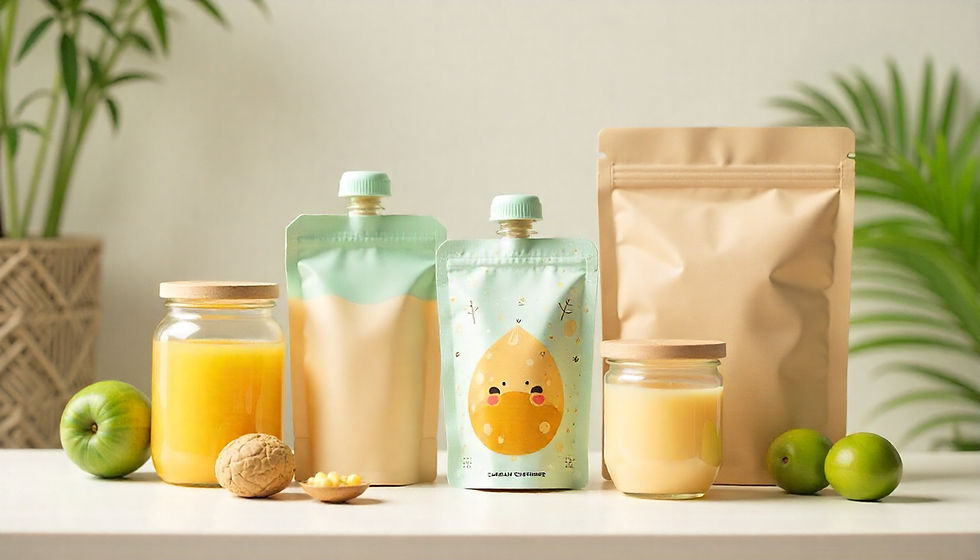
Another significant driver is the increasing preference for convenience. Busy lifestyles have led parents to seek products that are easy to store, carry, and serve. Packaging formats such as spouted pouches, single-serve containers, and lightweight jars address these needs effectively while maintaining product freshness.
Sustainability is also playing a pivotal role. Growing awareness of environmental issues has prompted parents to choose brands that use eco-friendly packaging. This shift is encouraging manufacturers to adopt recyclable paper-based cartons, glass containers, and biodegradable materials without compromising safety or functionality.
Innovation and Material Advancements in Baby Food Packaging
Material innovation remains at the core of competitive differentiation within the Global Baby Food Packaging Market. Traditional materials such as plastic and glass continue to dominate due to their durability and protective qualities, but their evolution has been significant.
Plastic packaging is increasingly designed to be lightweight, BPA-free, and recyclable, addressing both safety and sustainability concerns. Glass packaging, on the other hand, remains popular for premium baby food products due to its non-reactive nature and ability to preserve taste and nutrition.
Paper-based and carton packaging solutions are witnessing growing adoption, particularly in regions with strong sustainability regulations. These materials offer a lower carbon footprint and appeal to environmentally conscious consumers. Metal cans, while less prominent than other formats, continue to be used for specific product categories requiring extended shelf life.
Market Segmentation Overview
The Global Baby Food Packaging Market can be broadly segmented based on packaging type, material, and distribution channel.
By packaging type, pouches represent the fastest-growing segment due to their portability, resealability, and ease of feeding. Jars and bottles continue to hold a significant share, particularly for liquid and semi-solid baby food products. Cans and cartons serve niche segments where long-term storage is essential.
By material, plastic remains the most widely used packaging material, followed by glass and paper-based solutions. However, the market is gradually shifting toward sustainable alternatives as environmental regulations and consumer expectations intensify.
By distribution channel, supermarkets and hypermarkets dominate due to their extensive product variety and consumer trust. E-commerce platforms are rapidly gaining traction, offering convenience, subscription-based models, and access to premium and international baby food brands.
Market Size and Growth Forecast
The Global Baby Food Packaging Market is projected to reach USD 8.6 billion in 2025. From that point, it is expected to expand at a compound annual growth rate of 6.8% through 2034, ultimately reaching a market valuation of USD 15.4 billion.
This sustained growth trajectory is supported by continuous product innovation, increasing penetration of packaged baby food in emerging economies, and growing demand for high-quality, compliant packaging solutions. Manufacturers that focus on safety, sustainability, and convenience are expected to gain long-term market advantage.
Download a Complimentary PDF Sample Report:
Global Baby Food Packaging Market: Regional Analysis
Asia-Pacific: Leading the Global Market
Asia-Pacific is expected to dominate the Global Baby Food Packaging Market, accounting for more than 39.3% of total revenue by the end of 2025. This leadership position is driven by a large infant population, rising disposable incomes, and rapid urbanization across major economies such as China, India, Indonesia, and Vietnam.
The region is experiencing a demographic transition characterized by increasing workforce participation among women and growing reliance on packaged baby food products. According to UNICEF, India alone records approximately 23 million births annually, creating substantial demand for scalable and efficient baby food packaging solutions to support nutritional requirements at a national level.
North America: Focus on Premium and Safe Packaging
North America represents a mature yet steadily growing market, driven by strong consumer awareness regarding infant health and safety. Parents in this region prefer premium packaging formats that emphasize transparency, traceability, and nutritional preservation. Sustainable packaging solutions are gaining increasing preference, especially among environmentally conscious households.
Europe: Sustainability and Regulation Driven Growth
Europe’s baby food packaging market is heavily influenced by stringent safety regulations and sustainability initiatives. Manufacturers in this region are investing in recyclable materials, reduced plastic usage, and innovative designs that align with circular economy principles. Glass and paper-based packaging solutions remain particularly popular across European markets.
Latin America and Middle East & Africa
These regions are witnessing gradual but consistent growth due to improving economic conditions, rising awareness of infant nutrition, and expanding retail infrastructure. Increased availability of packaged baby food products is boosting demand for reliable and cost-effective packaging solutions.
Emerging Trends Transforming the Market
Several trends are redefining the competitive landscape of the Global Baby Food Packaging Market:
Growing adoption of eco-friendly and biodegradable packaging materials
Increased use of resealable and portion-controlled packaging formats
Integration of smart labeling and traceability features
Premium packaging designs targeting urban consumers
Enhanced focus on compliance with global food safety standards
These trends highlight the industry’s shift toward consumer-centric, sustainable, and technologically advanced packaging solutions.
Competitive Landscape and Strategic Focus
The market is characterized by intense competition, with manufacturers focusing on product innovation, sustainability initiatives, and geographic expansion. Strategic collaborations with baby food producers and retailers are common, enabling packaging companies to strengthen their market presence and respond quickly to changing consumer demands.
Research and development investments are increasingly directed toward reducing material usage, improving recyclability, and enhancing packaging functionality without increasing costs.
Frequently Asked Questions (FAQs)
1. What is driving the growth of the Baby Food Packaging Market?
Growth is driven by rising birth rates, increasing demand for convenience, urbanization, and heightened awareness of food safety and sustainability.
2. What is the expected market size by 2034?
The market is projected to reach USD 15.4 billion by 2034, growing at a CAGR of 6.8%.
3. Which packaging type is growing the fastest?
Pouches are the fastest-growing segment due to their portability, resealability, and convenience.
4. Which region dominates the global market?
Asia-Pacific leads the market with over 39.3% share, supported by high birth rates and expanding urban populations.
5. How is sustainability influencing packaging choices?
Consumers increasingly prefer recyclable, biodegradable, and environmentally friendly packaging, prompting manufacturers to adopt sustainable materials.
Key Takeaways and Market Summary
The Global Baby Food Packaging Market is set for strong and sustained growth, supported by demographic expansion, evolving lifestyles, and increasing emphasis on infant nutrition safety. Asia-Pacific remains the dominant revenue contributor, while North America and Europe continue to drive innovation in premium and sustainable packaging solutions.
Advancements in materials, packaging design, and functionality are reshaping the competitive landscape. Companies that prioritize safety, convenience, and environmental responsibility are well-positioned to capitalize on emerging opportunities. With the market projected to reach USD 15.4 billion by 2034, the Baby Food Packaging Market represents a dynamic and lucrative segment within the global packaging industry.
Purchase the report for comprehensive details:


Comments